News
UNC Hussman students document Hurricane Helene’s impact through storytelling

In May 2025, eight UNC Hussman students and four faculty and professional coaches traveled to Asheville, N.C., on a mission to tell stories about recovery and resilience after the devastation caused by Hurricane Helene in September 2024.
Since 2004, UNC Hussman Professor Pat Davison has led the Carolina Photojournalism Workshop (CPJW) that immerses students in storytelling projects in North Carolina communities. As part of the 13-day workshop, students work with Davison and a team of coaches to find and tell compelling stories from different regions of the state.
“I felt like it was a no-brainer to cover the Asheville area this year,” Davison said. “We had been there before, but because of what they went through, it seemed like an obvious choice to go there and try to find some of the people we had worked with before and do what we could to communicate what happened there through the words of the people affected.”
Before students meet their story partners and begin filming, Davison and the coaches lead a two-day boot camp focused on the skills of documentary storytelling. Students learn the elements of a compelling story — how to identify a story partner, build a connection, ask meaningful questions and structure a narrative.
The boot camp also covers technical skills necessary for a project of this size.
“Going into bootcamp, I knew what Premiere Pro was. I knew about the rule of thirds and how important it is that your audio levels peak between -12 and -6,” Amelie Fawson ’27 said. “I did not know what it was like shooting with a $2,000 camera. I didn’t know what it was like doing color grading, or what an L-cut or J-cut was, or how your editing could be so dynamic. Bootcamp really whipped me into shape.”
Fawson told the story of Braylen Levore, a tattoo artist living in Marshall, N.C. The first time Fawson met Levore, she hadn’t planned to film. She brought her camera but kept it tucked away in her bag. She didn’t want her interaction with Levore to feel transactional. Fawson wasn’t there to check a box for a school assignment; she was there to connect with Levore and share her story.
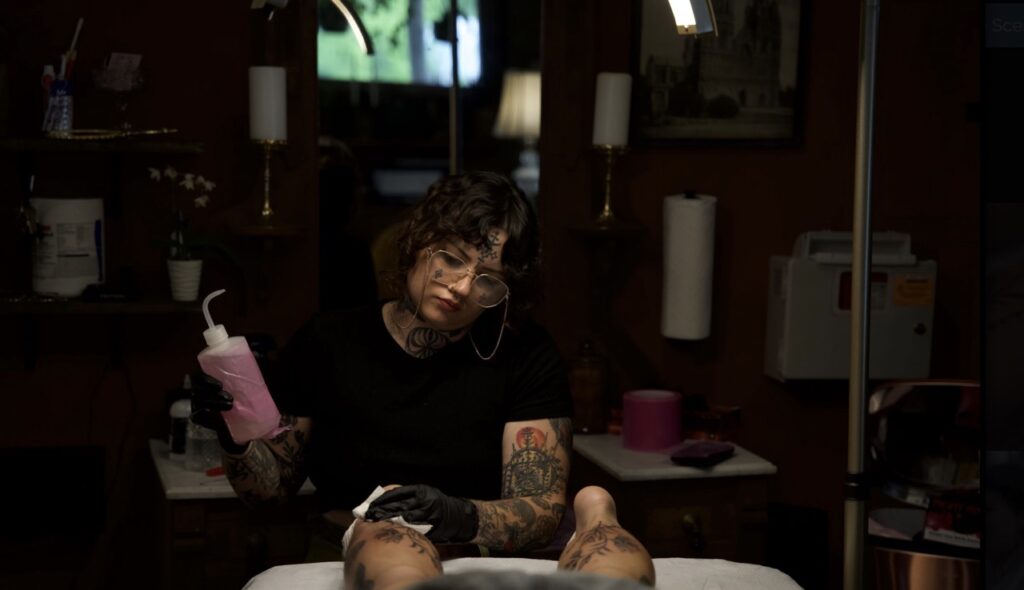
“Going into it, Pat was very clear that the people we work with on this film were not our subjects — they were our story partners,” Fawson said. “That, I think, raised the stakes for this project and made it clear this film is not about you or your skills. It’s about how you honor and respect the story of someone else. It is such an incredible gift and responsibility to be able to do that, and I think even in my writing and audio work I carry that story-partner sentiment with me.”
Levore had found her home in Marshall. For the first time in her life, she felt she and her daughter truly belonged. Unfortunately, her new home faced horrific devastation when the French Broad River Valley flooded during Hurricane Helene. Her tattoo studio was permanently damaged. What was once a sanctuary of creativity became an empty room covered in plastic sheeting.
When Fawson eventually began filming, her vision was to focus on the monetary loss Levore suffered when her business shut down. But as the story came together, her focus shifted.
On a whim, Fawson asked Levore if she could see her home. The two took a long car ride with no cameras. Fawson used the time to connect with Levore. They talked about life and got to know each other better.
Fawson realized that focusing on Levore’s material loss didn’t do her story justice. Losing her business wasn’t just a financial hit — it disrupted her sense of home and isolated her from a community she loved.
Through Fawson’s storytelling, viewers see Levore as loving, funny and resilient. In the final documentary, titled “Magic of Marshall,” viewers saw Levore as more than a small business owner. They saw her as a mother, partner and neighbor — all of which shaped her story into one of belonging, vulnerability, community and rebirth.
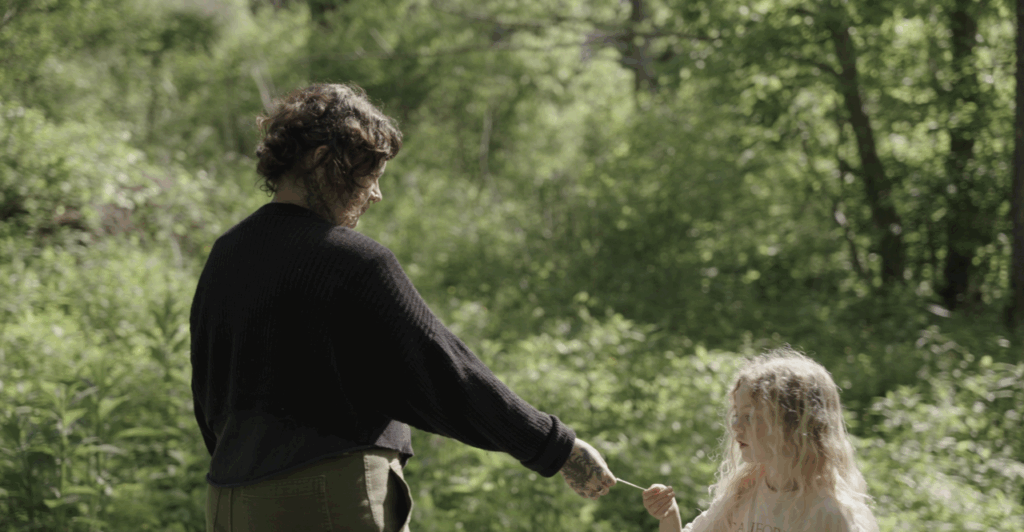
“This class was the first time that I ever got to pour my soul, talents, time and effort into making a long-form project that was so incredibly layered and technically difficult,” she said.
In addition to practicing storytelling and technical skills, Davison encouraged students to research extensively before traveling.
“It’s such a short workshop,” Davison said. “We don’t have time to spin our wheels that much when we get there, so we do a lot of pre-research. Students are encouraged to find their own stories, but if they can’t, we always have a list of contacts that we’ve gone through and established some kind of connection.”
Fawson, who is from the Boone area, used her local connections to find Levore and build a relationship. While she found her story partner on her own, she credited much of her success to the team of coaches.
“We had incredible coaches who didn’t do the work for us but would help nudge us in the right direction, polish our work and make everything our own,” Fawson said.
Each coach worked with no more than three students. Many of the coaches are workshop alumni who return to share their wisdom and experience. Fawson said her coach sat with her during editing — not to lead her in a particular direction, but to offer helpful suggestions and encouragement.
While working with coaches has always been a cornerstone of the workshop, Davison noted that this year’s workshop stood out from years past.
“Normally, CPJW doesn’t follow coverage of a crisis like this,” he said. “This is a pretty unique one.”
Regardless of the year’s theme, the team strives to find a representative set of stories. That goal proved challenging this year because everyone in the region had been affected by the floods in some way. It was impossible to tell every story, but that challenge gave students like Fawson the creative freedom to lean into their vision, connect with someone whose experience resonated with them and bring that person’s story to life.
Read more about the work done by the CPJW students involved in the Floodlines project.


