News
An old-fashioned kind of loyalty

When the North Carolina Tar Heels won the NCAA men’s basketball championship in 1957, the team was full of standout players from New York. That’s how Joe DeBlasio ’62, then a New Jersey high school student, came to know of a place called Carolina.
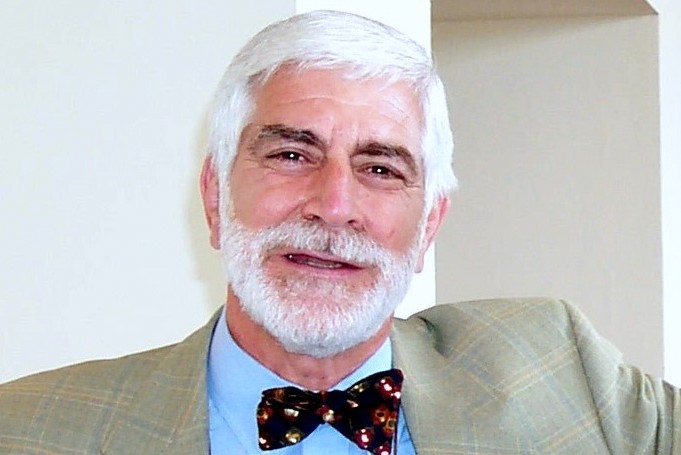
The next year, he applied for a Naval ROTC scholarship, and he told the committee his preferred school would be Villanova. They told him to pick again.
“They said, ‘Well, you and every other young man in the Northeast.’ North Carolina had won the national championship the year before, and it meant something to us because so many of the guys were from around here,” he remembers. “I wanted to go away to school. I’d made my mind up about that. They said to make a good choice, so I picked Carolina.”
DeBlasio didn’t get the scholarship, but he did get into Carolina. Sight unseen, he and his father boarded a plane for the first time in either of their lives to move him to the school down south.
“From there, things worked out for me in more ways than one,” he said.
At the end of his junior year, he made another leap of faith. He was studying education, but he was fascinated with the news and the news business. He loved to write. So, he walked into Howell Hall and nervously asked then-Dean Neil Luxon for permission to fit eight journalism courses into his senior year so he could graduate with a journalism degree. It wasn’t an easy ask.
“He seemed to be the toughest man on the face of the earth,” DeBlasio said. “But he gave me one of the biggest breaks I ever had — he let me do it. When you look back on your life and think about decisions that could be good or bad, this was one of the really good ones,” he said. “Who knows, when you’re 20 years old, if a decision will change your life. This one did.”
In the fall of 1961, when DeBlasio joined what he still calls “the J-school,” the school had occupied Howell Hall for only one year, and it had earned status as official school at UNC only a decade before in 1950. It was small, tight knit, with a fraternity feel, DeBlasio said. He knew all the students and all the professors. It seemed there was a common commitment to what journalism should mean.
“The J-school was a wonderful place, and the professors bent over backwards for me, because it was just that kind of school,” he said. “They knew I was trying to cram everything into one year, and they all seemed committed to the idea that it could be done. It was a wonderful feeling, and I never forgot it.”
DeBlasio enlisted in the U.S. Marine Corps after graduation, and a few years later he embarked on a steady career in a kind of once-ubiquitous, now-bygone print medium that once served everyone — the Yellow Pages. He sold and managed the sales of advertising space in the directories for almost 40 years, working for Reuben H. Donnelley Corporation and then consulting for the directory and classified advertising industry.
In gratitude for the meaningful education he received at Carolina, he’s remained a faithful donor to the UNC Hussman School of Journalism and Media to make sure others can have the kind of supportive education he did.
Though so much has changed, he said he’s proud of the ways the school has kept education around the ever-changing media landscape ahead of the times. And, though the ways we deliver news and media change, the emphasis on the importance of a free press that serves and informs is just as strong for the current generation as it was for those in students past.
“I have an old-fashioned kind of loyalty to the school that gave me so much,” he said. “You check off key events that changed your life, and that was one of them. It’s been important for me to support them because I’m sure there have been other people in similar situations I was in. This a school that helps you when you need it.”


