News
From the mountains to the coast: regional workshops bring scholastic media training across North Carolina

Every fall, hundreds of high school media students and advisers travel to universities across North Carolina for a day to step into student newsrooms, explore college campuses and sharpen their media skills.
These workshops, organized by the North Carolina Scholastic Media Association (NCSMA) for more than two decades, have become a cornerstone of scholastic media in the state.
The NCSMA, based in the UNC Hussman School of Journalism and Media, is bringing the fall workshops to two new campuses this fall. UNC Charlotte (UNCC) and Elon University (Elon) will host workshops for the first time, joining returning sites UNC Asheville (UNCA) and East Carolina University (ECU).
“The goal is to cover the state geographically so that we’re offering workshops in the mountains, the Piedmont and the coastal regions,” Monica Hill, director of the NCSMA, said. “We cover all the state in an effort to ensure that students can take a school bus ride to one of the workshops.”
These locations ensure that workshops are accessible in regions across the state, designed to bring student media outlet training to high schoolers and advisers.
“NCSMA workshops embody our commitment to the state by nurturing future communicators and making journalism training accessible in every region of North Carolina,” Raul Reis, dean of the UNC Hussman School of Journalism and Media, said.
Last year, North Carolina State University (NCSU) hosted its inaugural workshop, further widening the NCSMA’s footprint in North Carolina. Patrick Neal, director of student media at NCSU, planned a successful workshop that included tours of the student media offices and remarks by Tyler Dukes, the lead editor for AI innovation in journalism at McClatchy Media.
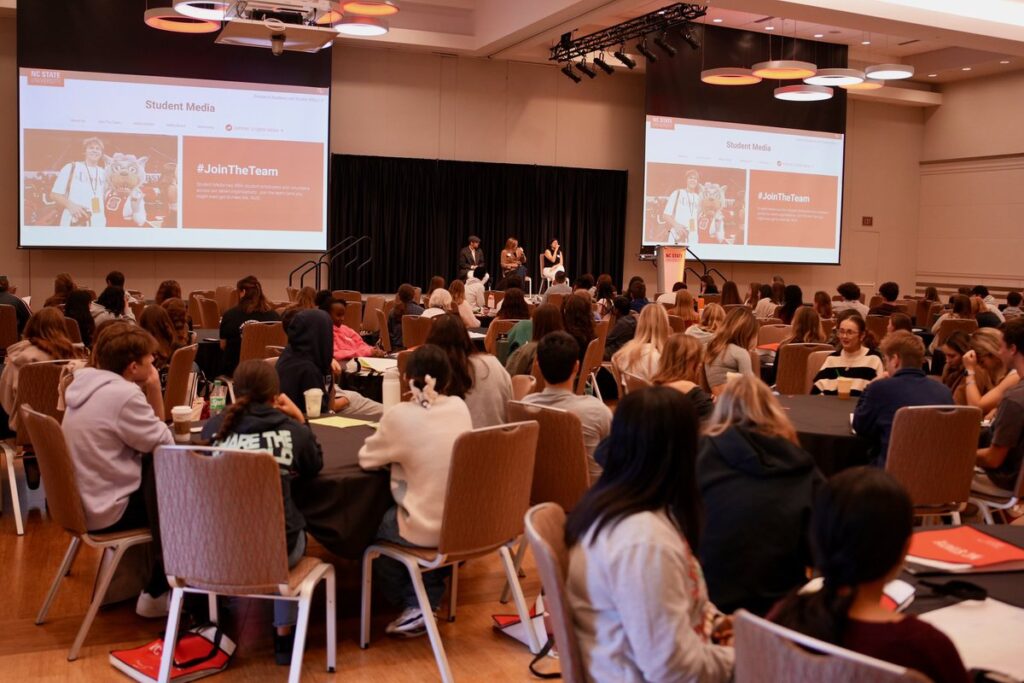
“I think it’s important that we provide these kinds of opportunities to as many high school students as we can, as there’s obviously a great demand for it,” Neal said. “The world needs good, young journalists now more than ever. This is where they come from.”
NCSMA partners with professional media organizations to lower the barriers to participation. Each workshop cohost agrees to charge only a small fee so that any high school student can go to a college campus for a day, take part in instructional sessions and enjoy lunch on campus.
Every host agrees to the same fee and policies, but each workshop has unique session offerings to showcase the host institution’s strengths.
UNCA, for example, is planning a panel on Hurricane Helene, bringing together journalists and experts to discuss media coverage of natural disasters and crises. Elon’s workshop will feature a panel on sports communication, highlighting the collaboration between the athletic department’s sports communication offices and academic programs like sports management in the school of communications.
Programming typically includes keynote panels; breakout sessions led by journalists and educators; adviser roundtables; and opportunities to explore student media facilities on the host campus. Past workshops have covered topics such as media law, press rights, photojournalism, sports coverage and investigative reporting.
For Hill, the workshops are part of her mission to ensure that high school journalists have the training and support they need to serve their communities.
“High school journalists contribute directly to their school community,” Hill said. “Yearbook staff capture the history of schools. News staff, whether online or print, work in service to their communities to inform them. Broadcast, podcast and radio staff contribute to news literacy. There’s research that directly links the news literacy advantages of a student attending a school with a student media outlet.”
She added that the workshops are an example of the NCSMA’s year-round support for students and advisers.
“One of the most important things we do is let teachers and students know that we’re here, and we support what they do,” Hill said.
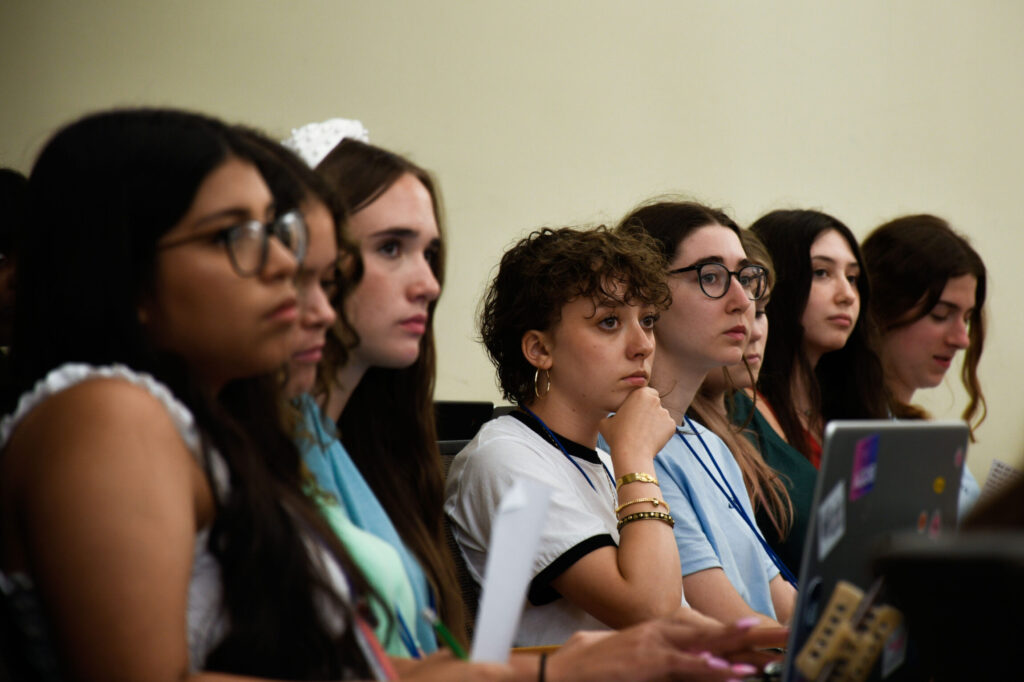
In addition to training students for their current roles, the NCSMA’s workshops open doors to future careers. Spending a day attending sessions, meeting professors and interacting with professional journalists helps students envision themselves on a college campus and maybe even working in a media-related field someday.
It also strengthens the ties between universities, professional organizations and the next generation of storytellers. For schools like UNCC and Elon, hosting for the first time this fall is a way to showcase their programs while investing in future media professionals.
Hill emphasized that the workshops wouldn’t exist without the collaboration with local outlets like The News & Observer (The N&O), which has been the NCSMA’s longest running media partner with more than 25 years of collaboration. Media professionals from The N&O will be teaching the majority of sessions at the Elon workshop this year.
With four sites scheduled for October, the NCSMA expects to reach hundreds of students again this year. As campuses continue to join, the association’s service to North Carolina high school media students grows stronger.
“As far as future planning goes, it’s important that we listen to their needs and make certain that we’re meeting them so that we can ensure that student voices are always being heard,” Hill said.
ABOUT THE NCSMA
The N.C. Scholastic Media Association (NCSMA) promotes scholastic journalism programs and services, including a mentoring program for new teachers. The NCSMA also offers a summer institute, the Carolina Sports Journalism Camp and spring semester field trip days. The association coordinates statewide contests for student media and a fellowship program for N.C. high school journalism teachers.


