News
Turning the Next PAGE on her career

New York investigative reporter Emily Palmer has covered high profile crime cases from Sean “Diddy” Combs to El Chapo, but her latest venture — and one closest to heart — brings the healing power of narrative to youth involved in the juvenile justice system.
This story was written by Kim Weaver Spurr ’88 and originally published on magazine.college.unc.edu.
In many ways, Emily Palmer (global studies, media and journalism ’14) was at the top of her game. She had covered crime as a long-term freelancer for The New York Times for nearly a decade and written articles for ELLE and Cosmopolitan. In 2023, she landed a job at People magazine as a senior crime writer. Her resume reads like a who’s who of people at the center of high-profile cases, including Sean “Diddy” Combs, R. Kelly, Anna Delvey and El Chapo.
But in 2024, Palmer was part of massive layoffs at People, one in a series of traumatic personal events, and “everything just sort of burned to the ground at once.”
“I felt like everything that I had built in my first decade was gone, and I was left trying to figure out what I wanted to make of it,” she said.
In the meantime, Palmer kept thinking about a juvenile crime case in Brooklyn that had profoundly impacted her. In 2018, she covered a story for The New York Times about 14-year-old Aaron Nathaniel Jr., who shot and killed 16-year-old Timi Oyebola when he was playing basketball in the Brownsville neighborhood. Oyebola’s father told her at the time, “I forgive the boy who killed my son.” Palmer said she was initially so shocked she didn’t even write that down.
It would be almost four years later before Nathaniel, now 18, pled guilty to murder and was sentenced to 10 years to life. Palmer covered that story, too. Nathaniel’s father told her about the struggles that his son had experienced up until the moment of the shooting — the stabbing death of a friend, a learning disability and eventually dropping out of school. He said, “If anything saves my son, it will be writing.”
Palmer thought about why she pursued a journalism career in the first place — she wanted to understand what was happening behind the crimes, “what causes people to fall off the edge.” How could she help kids reclaim their own narratives?
The next page in her story would soon unfold.
“Education as exploration” at Carolina
Palmer came to Carolina to study broadcast journalism at the UNC Hussman School of Journalism and Media but also fell in love with global studies, her second major in the College of Arts and Sciences, through classes in Spanish, Italian, political democracy and more.
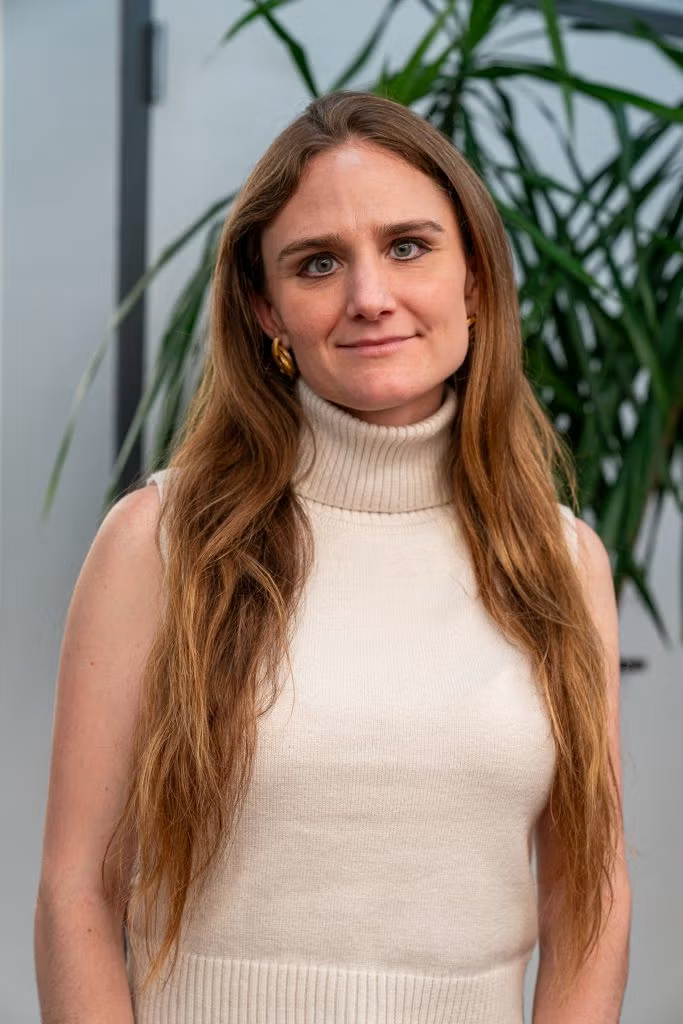
She studied abroad four times, spending two summers in Asia and a semester in London through Honors Carolina. She traveled throughout the English countryside, Spain, Italy and France for separate research projects on Jane Austen and Ernest Hemingway, both with the help of private support.
“I have a voracious interest in understanding the world around me,” Palmer said. “Global studies became the heart and soul of that “education as exploration” mindset and why I wanted to be a journalist. Both majors were about asking questions, but they came at it from such different ways and made me a more well-rounded person.”
She also pursued a creative writing minor in the College’s English and comparative literature department, thanks in part to early mentorship from her C.E. Jordan High School teacher and Carolina alumnus Stuart Albright (English ’01), a General Alumni Association Distinguished Award winner. She did her Honors thesis in creative writing.
Palmer graduated debt-free thanks to the Carolina Covenant. She went on to pursue an M.S. in investigative journalism at Columbia University and served as a Spotlight Reporting Fellow at The Boston Globe.
“Carolina made it so easy to follow that exploration, and there were so many good opportunities and professors who were really good at connecting us to those things,” she said. “I fully understood what a huge gift a debt-free education was when I applied to graduate school.”
A full circle moment
In 2024, when she felt like she was at one of her lowest moments both professionally and personally, Palmer kept going back to her passion for creative writing, which was cultivated in high school. She thought about the enduring power of good teachers.
“I had also done tons of reporting on child welfare and juvenile detention, even though that’s not the work I’m best known for,” she said. “It was an incredibly painful but an incredibly transformative time.”
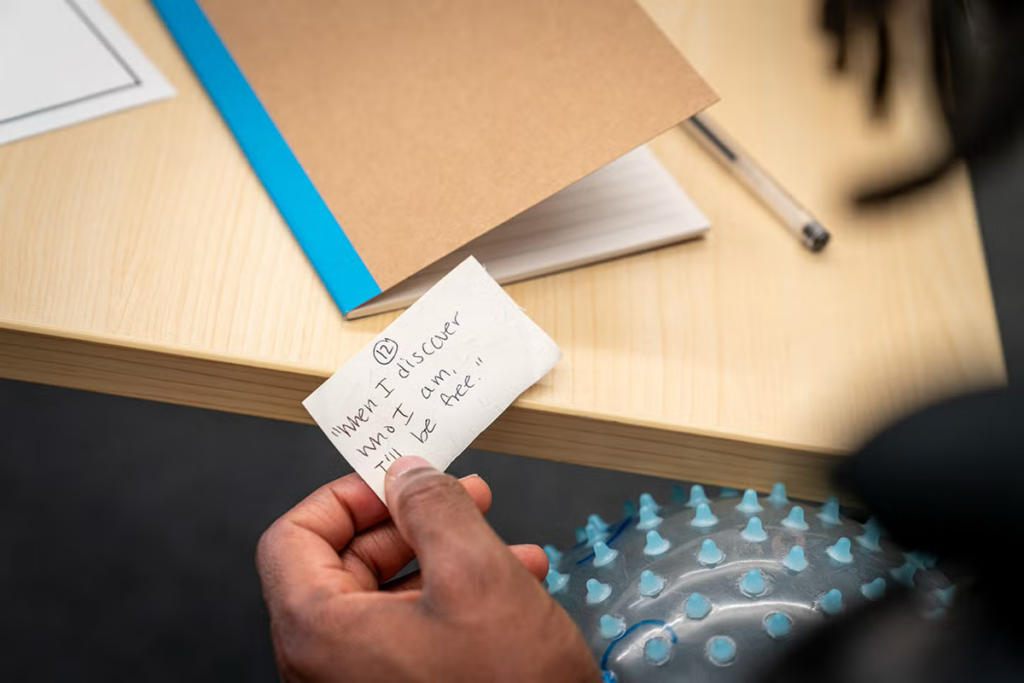
In 2025, Palmer founded Next PAGE, a literacy nonprofit that offers trauma-informed creative writing workshops to New York City teens to young adults who are in detention or re-entry programs.
A number of serendipitous encounters had led her to this moment, including connecting with people who had knowledge about founding nonprofits, fundraising, education and children’s services.
“One of our workshops was in Brownsville, the juvenile detention center where Aaron Nathaniel had been held,” she said.” It was a full circle moment, as some of the staff knew Aaron and his story.” Additional workshops are being offered in East Harlem and the South Bronx.
Palmer’s goal is to use storytelling as a tool for literacy, healing and long-term re-entry.
A quote on the nonprofit’s website echoes those thoughts: “Next PAGE is a program built on the idea that literacy is power, and if you can tell your story, then you can remake your future.”
“This whole idea of education as exploration that I first learned at UNC is really the foundational stone of what Next PAGE is all about,” Palmer said. “Study abroad showed me just how big the world is, and that despite beautiful differences, how very much the same we all are as human beings.
“It’s been a winding path, but it all led me here.”
Learn more at nextpageworkshop.com.


